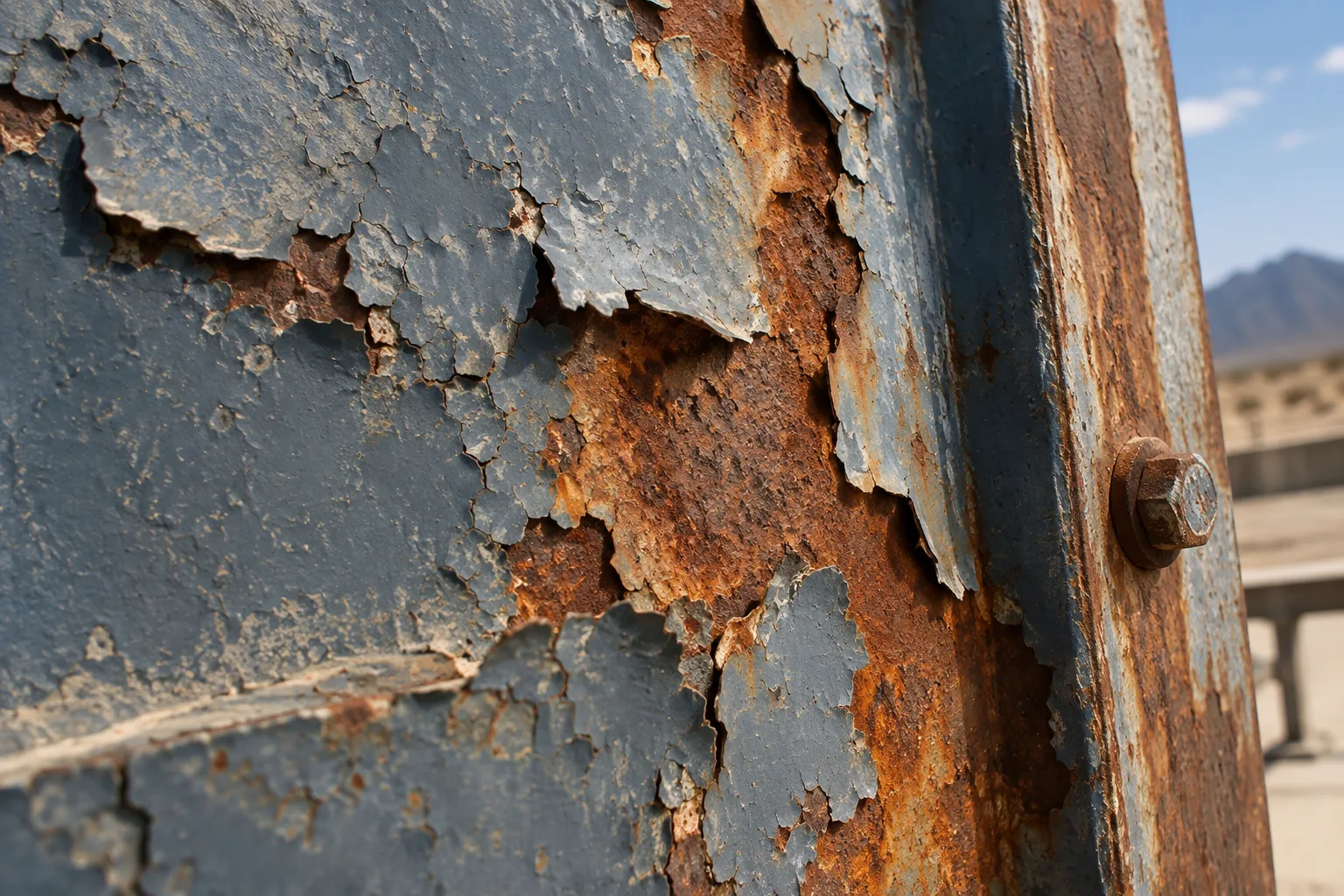
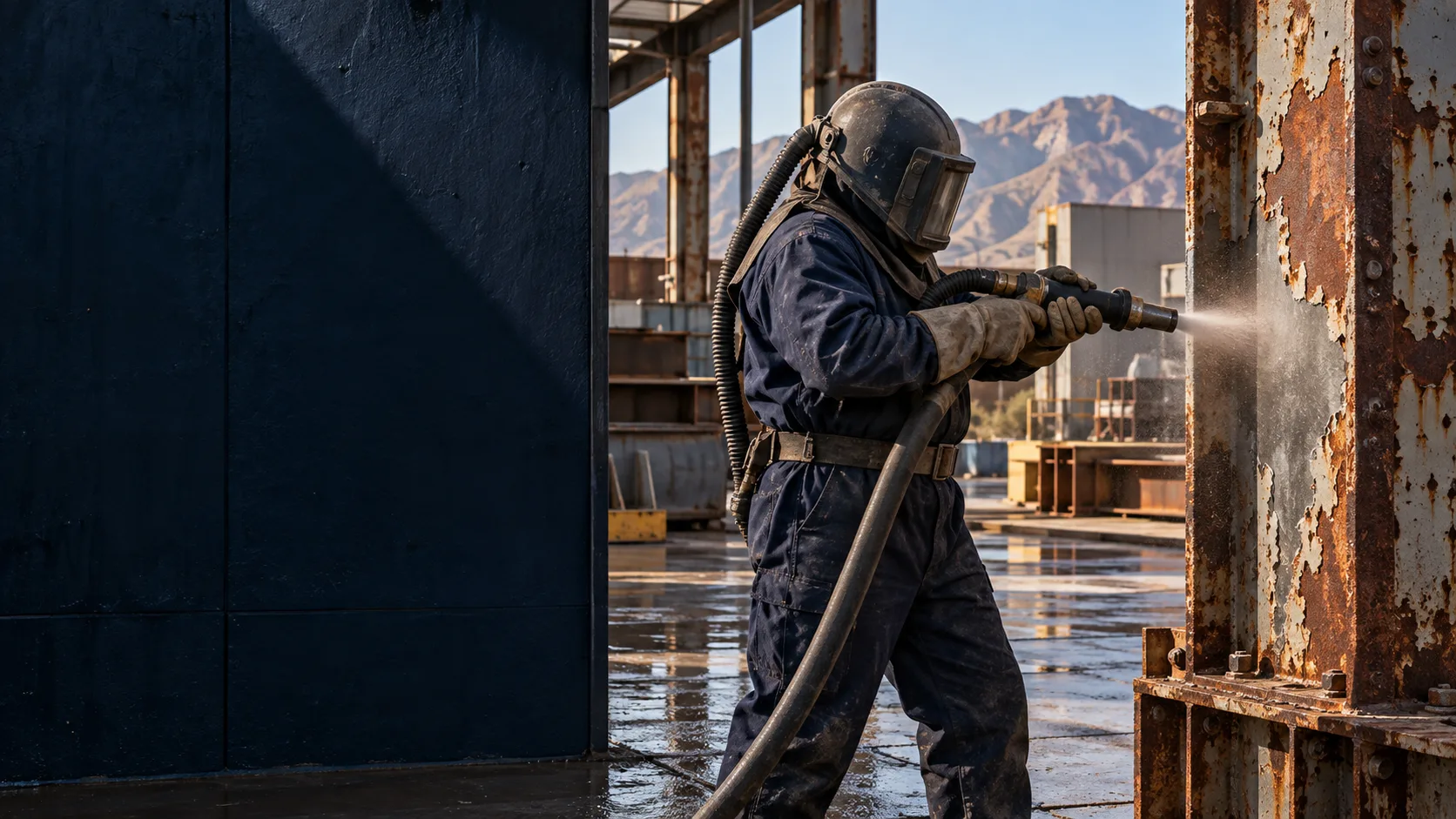
Built for your property
A clean surface does more than look good.
The right preparation starts with the material and its condition. Share what needs attention and what you want the surface to be ready for.
Surfaces & considerations
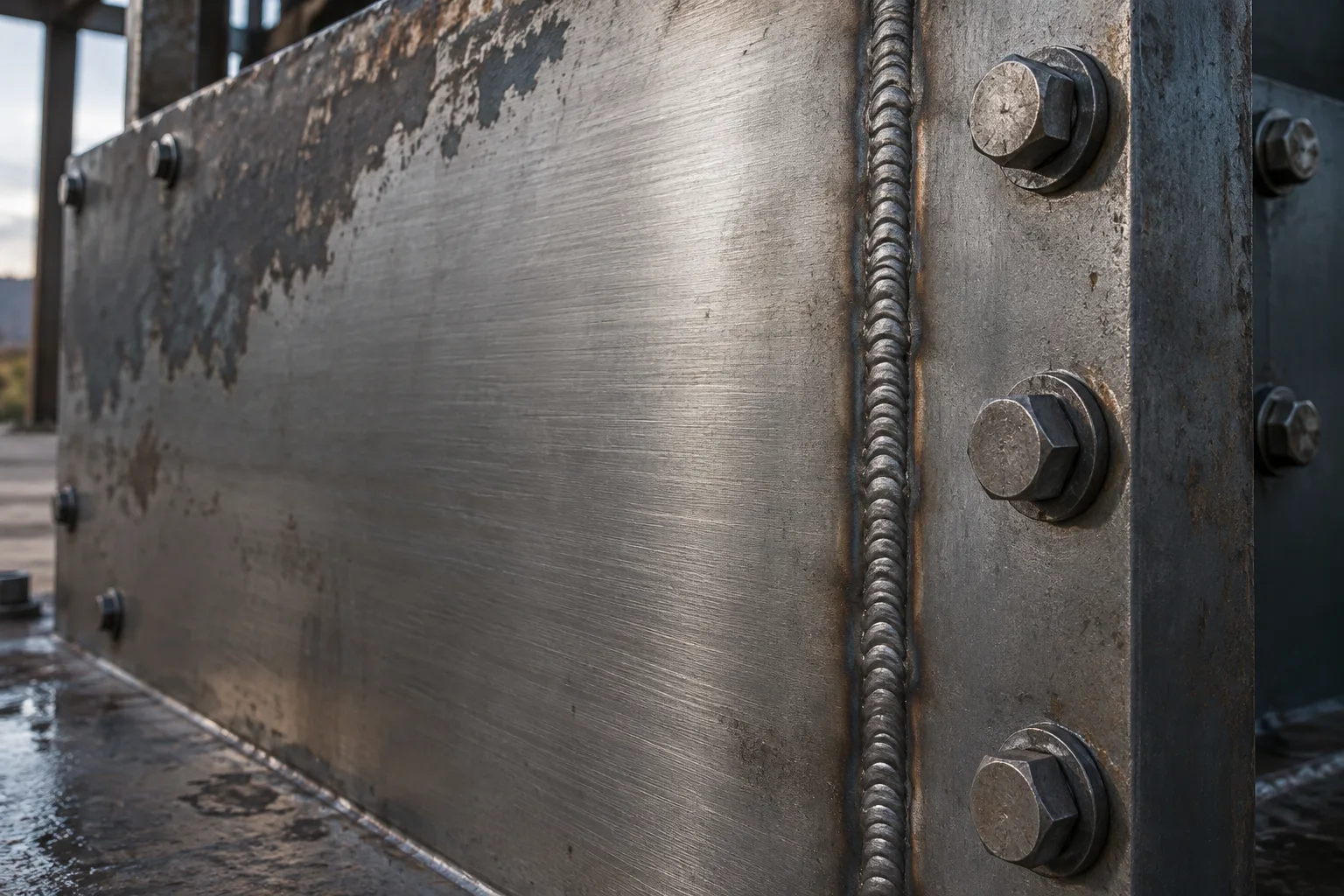
Steel & welds
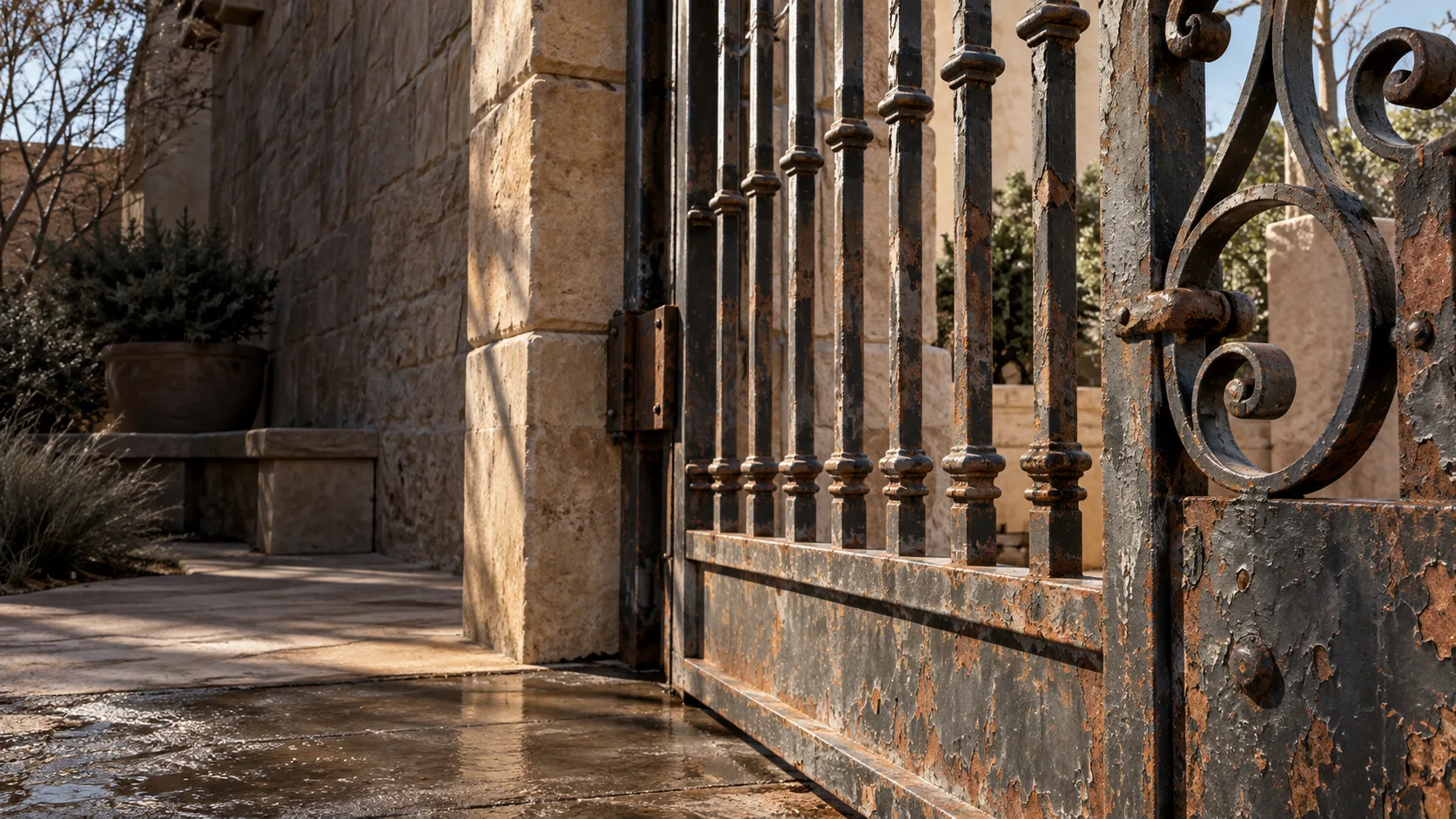
Ironwork
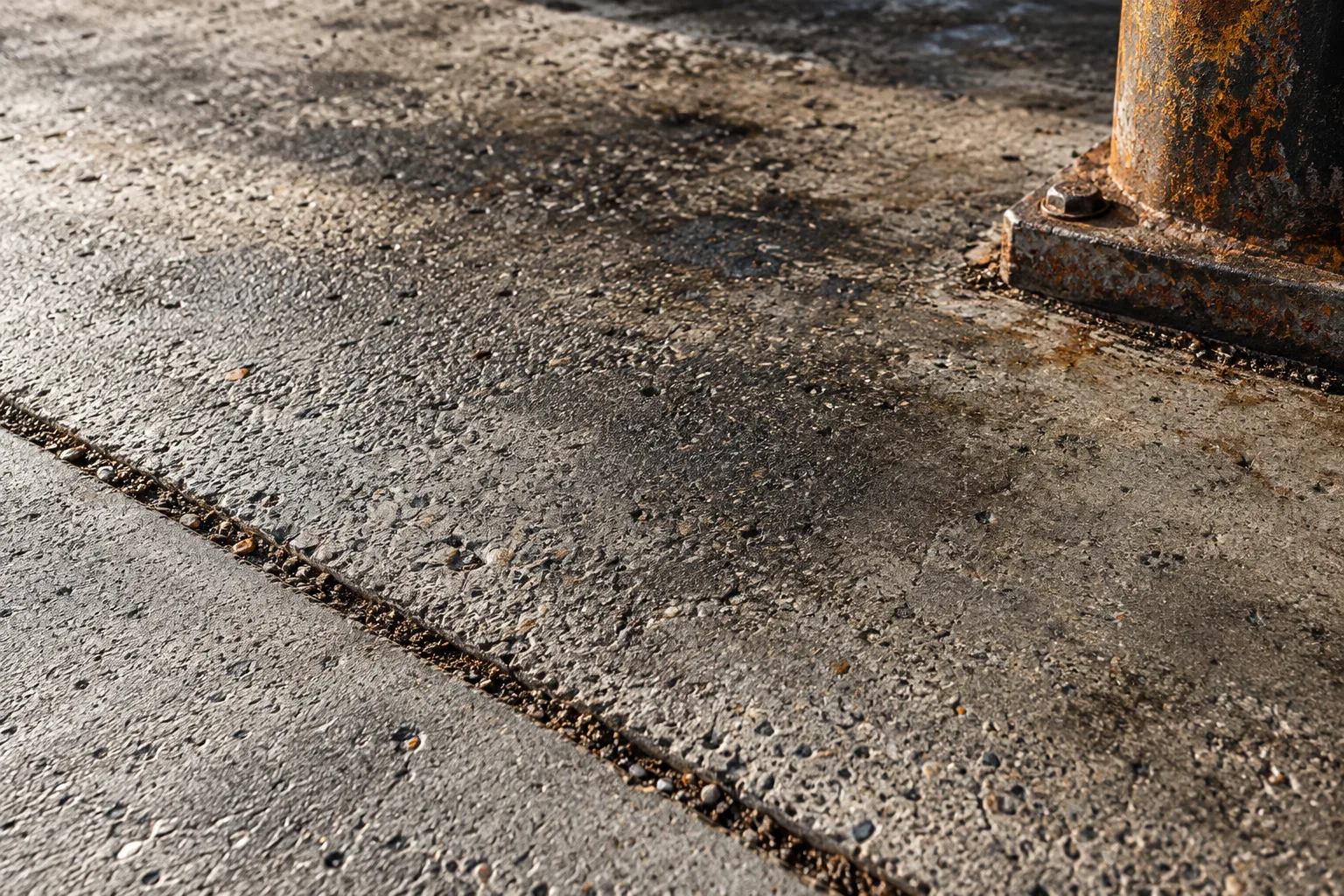
Material assessment
Concept imagery · Surface studies
From our project archive
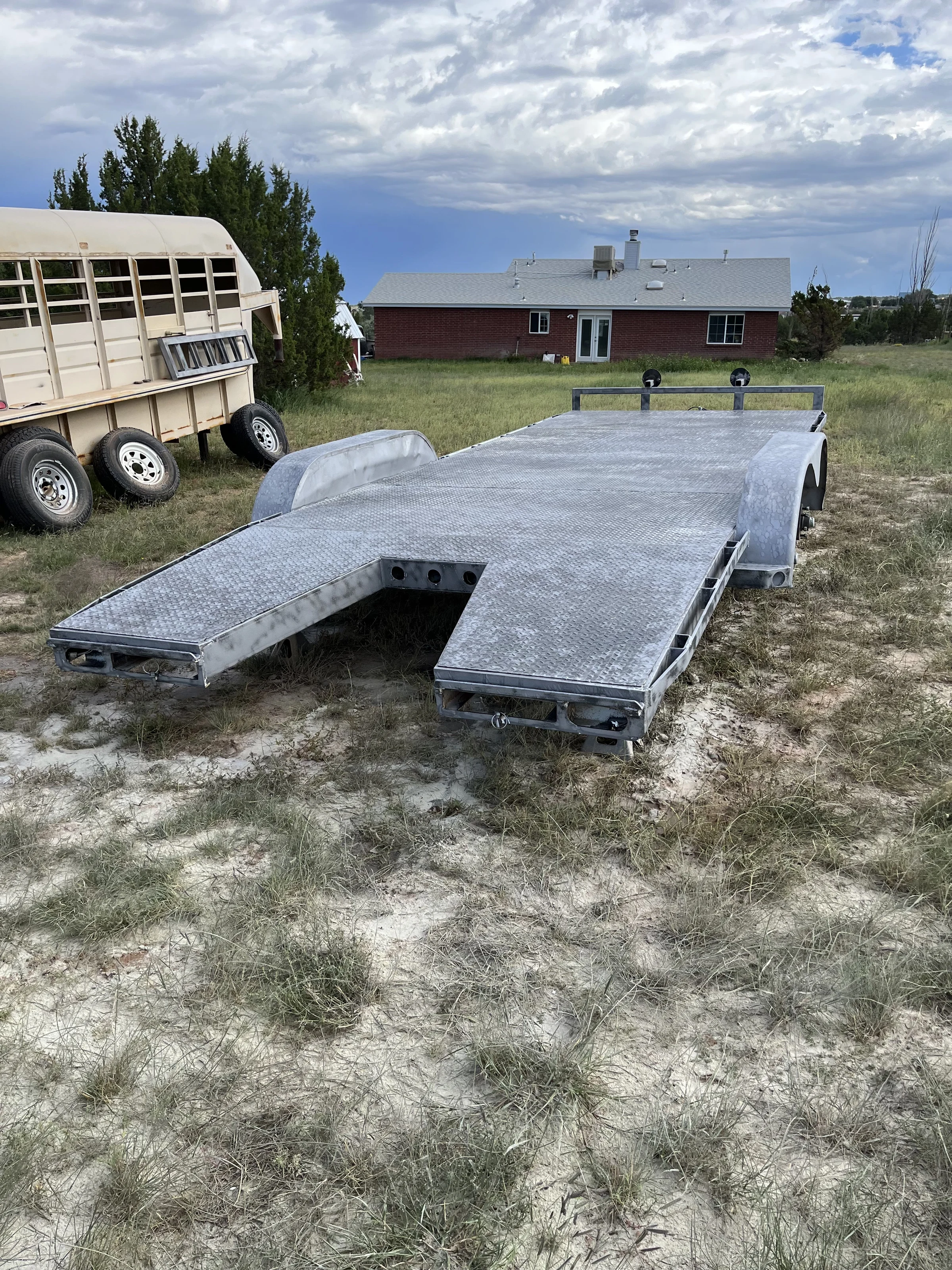
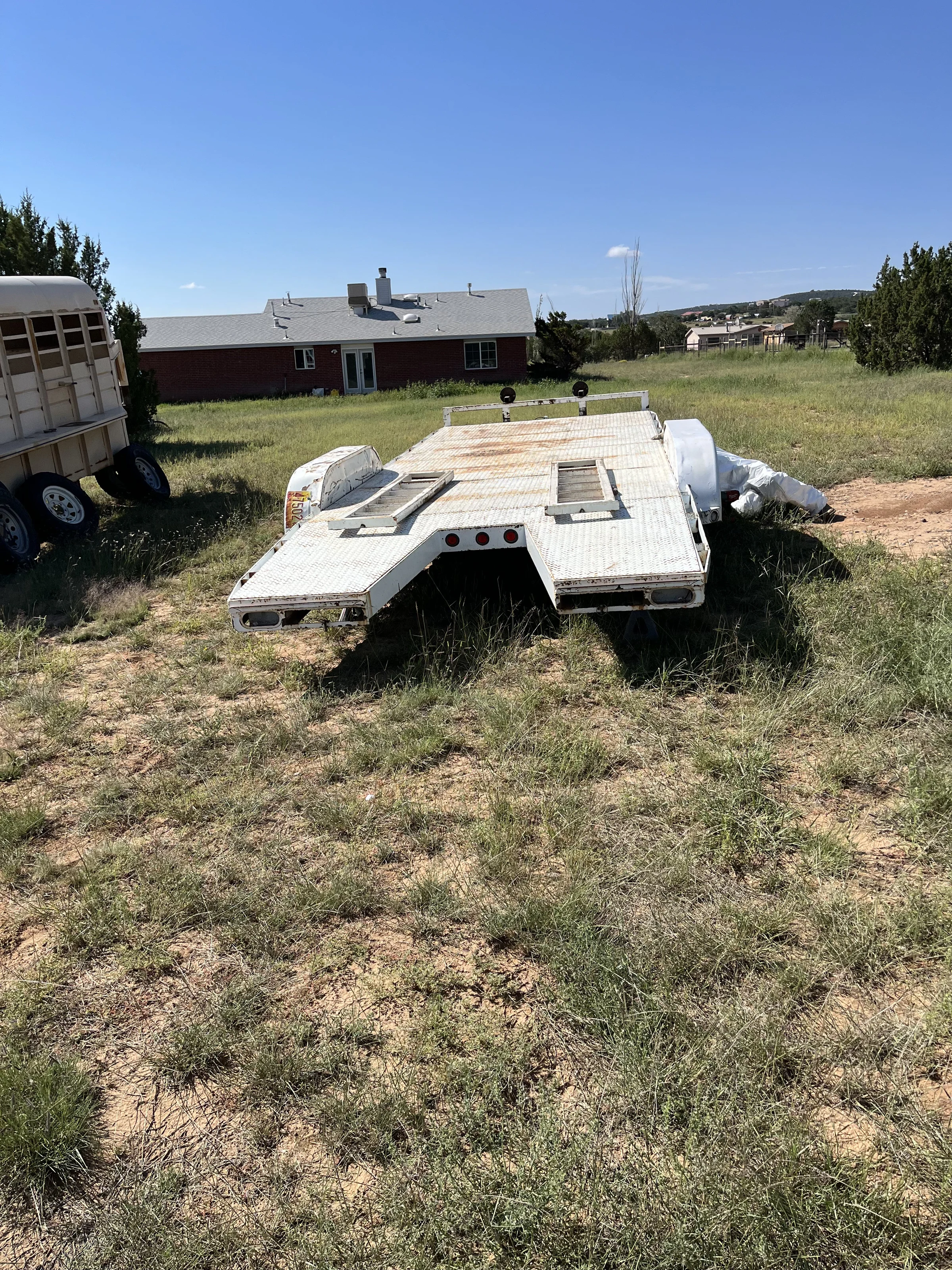
Old coating off.Steel revealed.
A car-hauler deck, stripped back to its metal surface. The diamond plate and edges are visible again.
- Surface
- Steel trailer deck
- The work
- Abrasive surface preparation
A plan before the work
Clear scope.
Considered details.
Identify the material
Share the surface, existing coating, approximate quantities, and photos. Tell us about the required finish or any specification the next contractor needs.
Assess the conditions
We review access, active operations, protection, residue handling, and whether a test area is needed. Coatings with unknown or hazardous contents need assessment before work is agreed.
Choose the approach
The abrasive media and pressure depend on the material and coating. Masking, exclusions, and realistic results form part of the agreed scope.
Plan the next stage
Bare steel can flash-rust quickly. Agree any rust inhibitor and coating timing before blasting so the refinishing plan fits the job.
Good questions
Know what to expect.
Is this sandblasting?
Sandblasting is a familiar name for abrasive blasting. The material doing the cleaning is called abrasive media; it is not necessarily sand. Our dust-suppressed process combines media, water, and compressed air. The choice of media depends on the job.
How is blasting different from pressure washing?
Pressure washing uses pressurized water to clean buildup. Abrasive blasting adds media to remove rust, paint, or coatings and prepare the underlying surface. The right choice depends on the material and the result you need.
Can you work at our business?
We provide mobile service. Share your site address, access hours, surrounding operations, and any vendor or insurance requirements so suitability and documentation can be confirmed before booking.
Is the metal ready for coating afterward?
Tell us the preparation standard your coating process needs. We will agree the achievable finish and handoff in the scope. Bare metal can flash-rust within hours, so inhibitor use and coating timing need to be planned.